June is Pride Month – and it means far more than just rainbow flags.
Pride stands for visibility, diversity, and the self-determined celebration of queer identities. It is protest, remembrance, and empowerment all at once – and thus much more than a colorful event. But what is the connection between Pride and piercings?
Deeper than many assume.
Today’s piercing culture – professional, artistic, individual – did not develop in a vacuum. It is closely intertwined with queer, alternative, and subcultural movements. Its origin lies in the search for self-determination, demarcation from norms, and the desire to make identity visible.
Pride and the body as an expression of political stance
“Pride” is the proud counterpart to a history of discrimination, invisibilization, and shame. It is a conscious act of self-assertion – just like a piercing. For many queer, trans, non-binary, or non-conforming people, body jewelry is far more than an accessory. It is part of self-definition, an expression of belonging, and a symbol of body autonomy.
Piercing as an act of resistance – since Stonewall
Pride Month commemorates the Stonewall Uprising in June 1969. When police violence against queer people escalated at the “Stonewall Inn” bar, the community publicly resisted for the first time – a turning point for the LGBTQIA+ movement. The subsequent protests paved the way for a new self-understanding: queer, loud, visible.
From Stonewall to “The Gauntlet” – the queer roots of the piercing scene
In the 1970s, Jim Ward founded the first professional piercing studio in the Western world in Los Angeles: “The Gauntlet.” It quickly became a safe space for queer people. It wasn’t just about aesthetics – but about identity, body freedom, and community. Piercing was a form of empowerment, an expression of pride – especially for people who did not find themselves reflected in the dominant beauty culture.
A visible sign of belonging
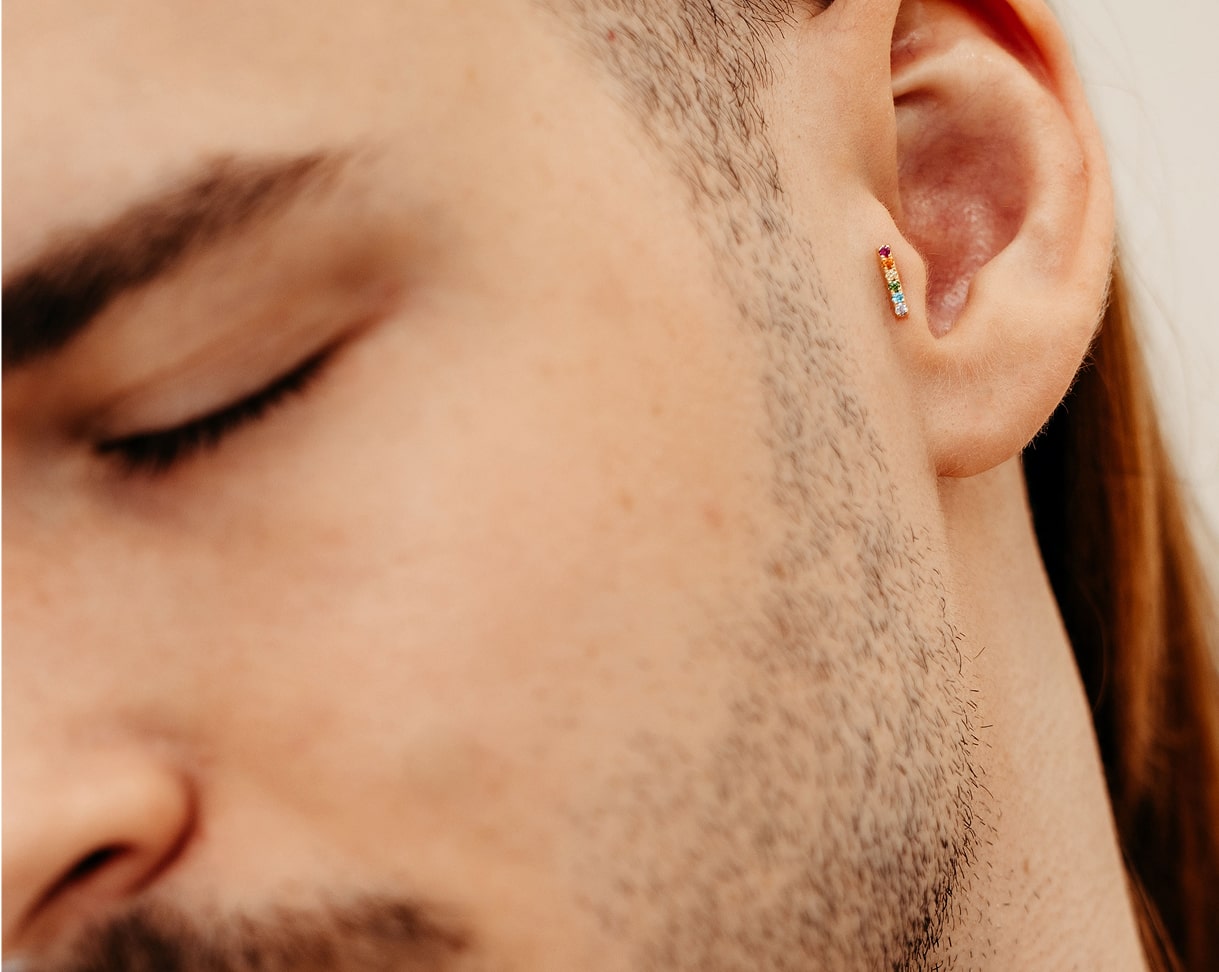
Long before queer symbols arrived in the mainstream, the community used codes to recognize each other: clothing, tattoos – and piercings. They were discreet hints of belonging and orientation in an often hostile environment. One example: the so-called “Gay Ear” – a single piercing on the right earlobe that gay men used as a queer identifier.
Piercings as a form of gender affirmation
Simple earlobe piercings, worn on both sides, were considered a feminine code – a subtle celebration of femininity. For many trans women, it was a significant step on the path to gender affirmation. But even outside binary notions, piercings have a gender-affirming effect: they help shape one’s own body image – regardless of societal expectations.
Visibility is political – body modification is too
In a world that wants to normalize or invisibilize queer bodies, one’s own body becomes a projection surface for resistance. Piercings, tattoos, or other modifications are signs: “I am here. I decide. I show myself.”
What was once rebellious is now socially accepted – but the origin remains palpable. Piercings tell stories of courage, belonging, and individuality. They celebrate diversity – just like Pride.
Piercing studios as safe spaces
Queer-friendly piercing studios are more than just places for body art. They are meeting points, safe spaces, and community centers. Piercers are often also conversational partners, supporters, sometimes even confidants.
Especially for trans, non-binary, and gender non-conforming people, a piercing can be a powerful means of reclaiming their own body. It is a visible sign of self-determination and pride.
A piercing can say more than words:
- “I decide what happens to my body.”
- “I am visible – and that’s a good thing.”
- “I celebrate who I am.”
Pride gets under the skin
Whether you wear piercings yourself or not – Pride Month is about more than external expression. It’s about the freedom to define yourself. Piercings are an expression of this freedom. They tell silent, powerful stories of transformation, belonging, and empowerment.
They accompany very personal journeys: coming out, transition, finding one’s own pronouns, or rejecting societal categories.
Pride also means: You are exactly right as you are. And your piercing? That’s part of this story – colorful, brave, proud.